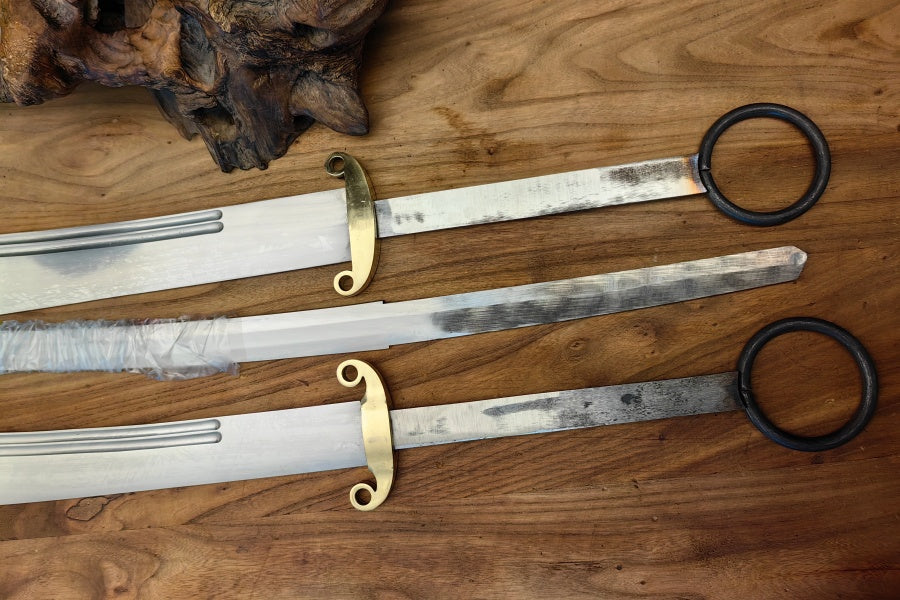
60Si2Mn high-quality spring steel (China-made), hand forged
Heat Treatment
Oil-quenched & tempered
Hardness
Approx. HRC 55
Flexibility
Bends 70–90° with excellent resilience
Blade Finish
Hand-ground and polished
Guard
Cast copper handguard
Handle
Rosewood handle scales with waxed cord wrap
Scabbard
Genuine leather scabbard, hand-stitched
Structural Reinforcement
Spot-welded guard for added strength
Tang Upgrade
Increased from historical 20 mm to 24 mm
Ring Reinforcement
Thickened to a full 8 cm diameter
Handle Construction
Reinforced rosewood scale structure
Design Intent
Historically accurate appearance with modern
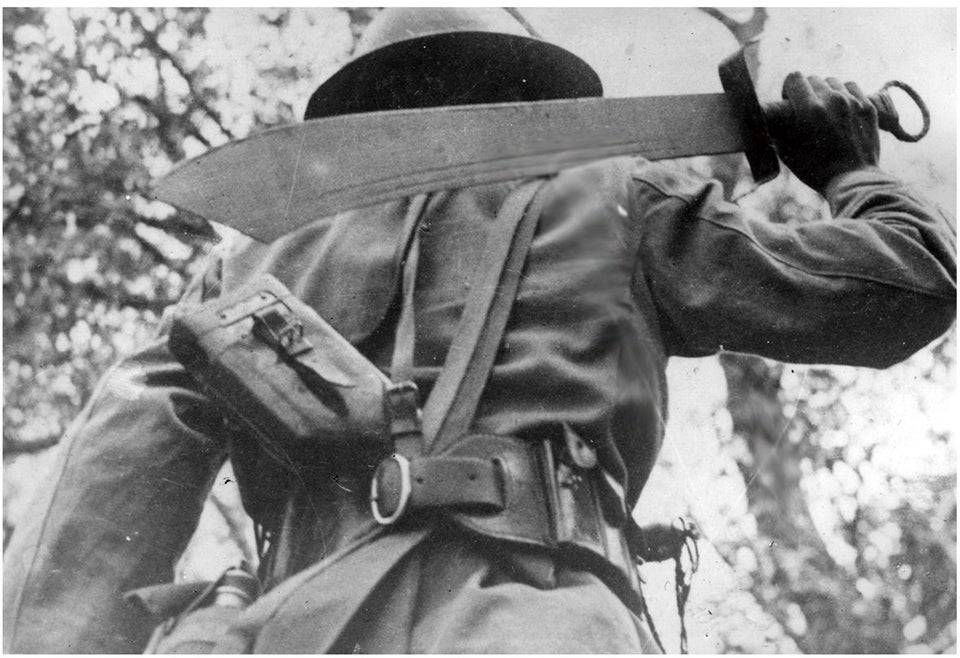
The Chinese Dadao has a long history but is best known today as the Sword Chinese Soldiers swung to hold back the Japanese invasion in World War 2.
Short on modern weapons, Chinese soldiers trained in the use of Dadao, a saber with a short, stocky blade and a long grip, that worked effectively to counter rifles with bayonets.
Most famously, the Chinese 29th Army a prominent National Revolutionary Army Unit (led by General Song Zheyuan) engaged the Imperial Japanese Army from the early stages of the war in 1937. Famously, they defended the Beijing-Tianjin area, participating in the Marco Polo Bridge Incident and the Battle of Beiping–Tianjin before being disbanded in August 1937.
29th Army Key Facts:
Command Structure: Commanded by General Song Zheyuan, the army was nicknamed the "Route Army" and was part of the 1st Army Group, numbering about 78,300 to 100,000 men.
Role in 1937 Conflict: The 29th Army was positioned around Beiping (Beijing) and Tianjin during the Marco Polo Bridge Incident on July 7, 1937. They fought against the Japanese advance for 24 days but were forced to withdraw due to superior Japanese weaponry.
Heroism and Tactics: Despite being outgunned, the army was known for its determination. Units famously utilized dadao (large swords) in close combat. Key figures included Zhao Dengyu and Tong Linge, who died defending the city.